Description
Searching for a robust 40 feet flatbed trailer? Our flatbed trailer model is designed for maximum performance, with a heavy-duty high-strength steel frame and an impressive 60,000 kg payload. It’s the perfect solution for transporting containers and bulk cargo with confidence.
40Ft Flatbed Trailer Specifications
| No. of axles: |
3 |
| Payload (kgs): |
40000 |
| Tare weight (kgs): |
7000 |
| Kingpin: |
Bolt-in type 3.5 ” or 2” |
| Landing gear: |
Two-speed manual operation 19” |
| Tire size: |
315/80R22.5 |
| Rim size: |
9.00*22.5 |
| Container locks |
12 (for 1x20GP, 2x20GP, 1X40HQ), 20FT container locks move forward |
| Painting: |
Two coats of anti-corrosion primer; one coat of finish painting |
| Accessory: |
One toolbox; one set of standard tools; one 1,400 L reserve tank (4 mm thick); one 100 L aluminum water tank; one fuel hose; |
40 Feet Flatbed Trailer Image
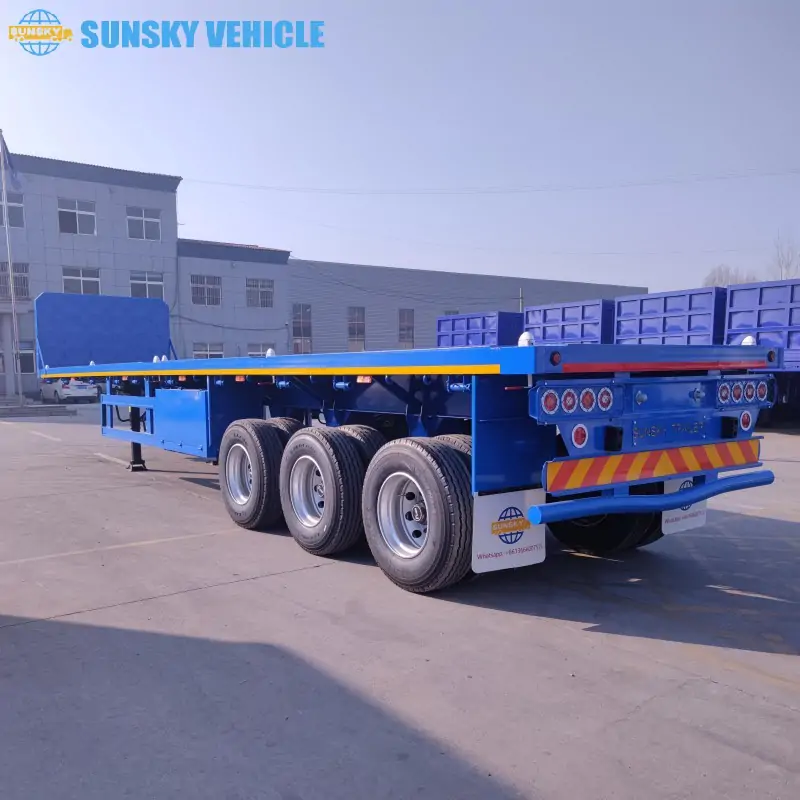
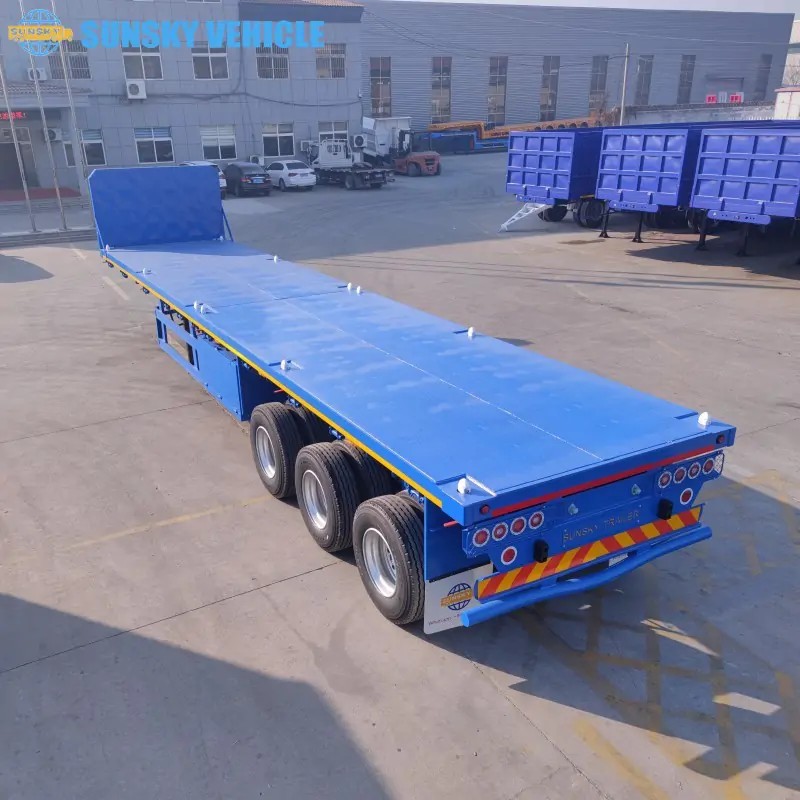
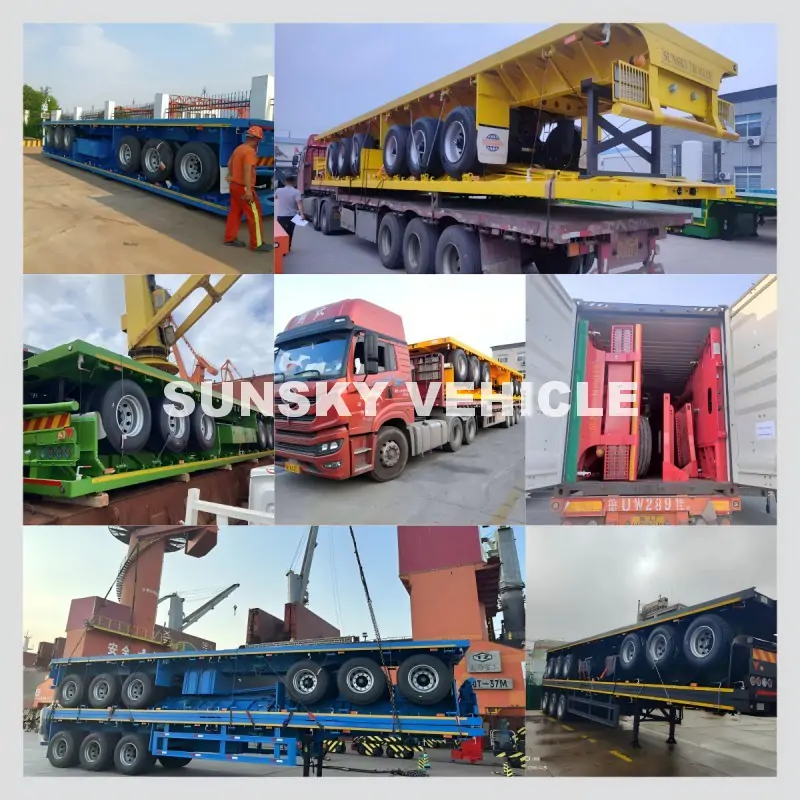
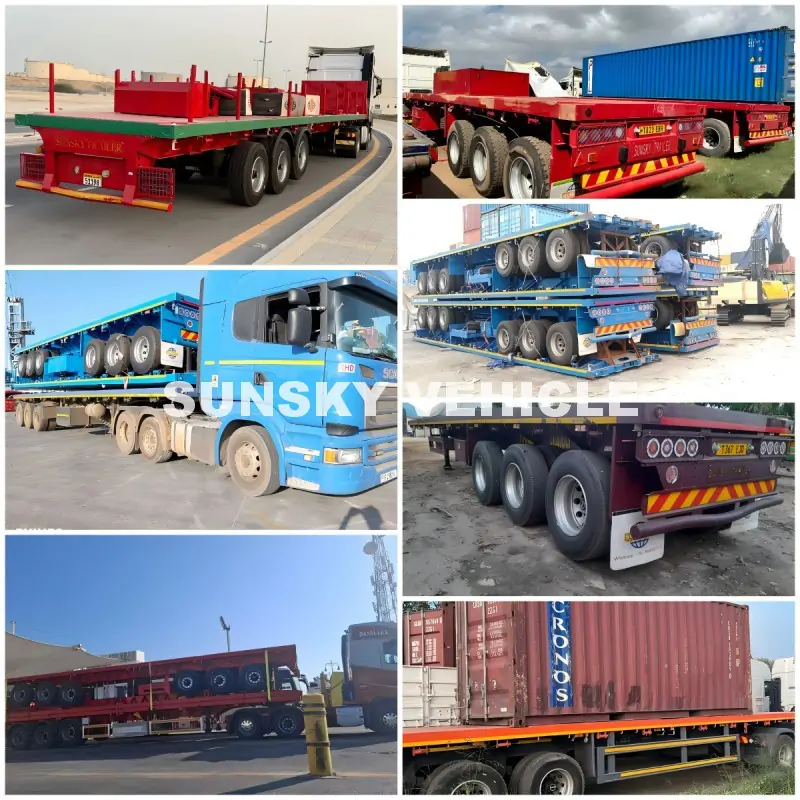
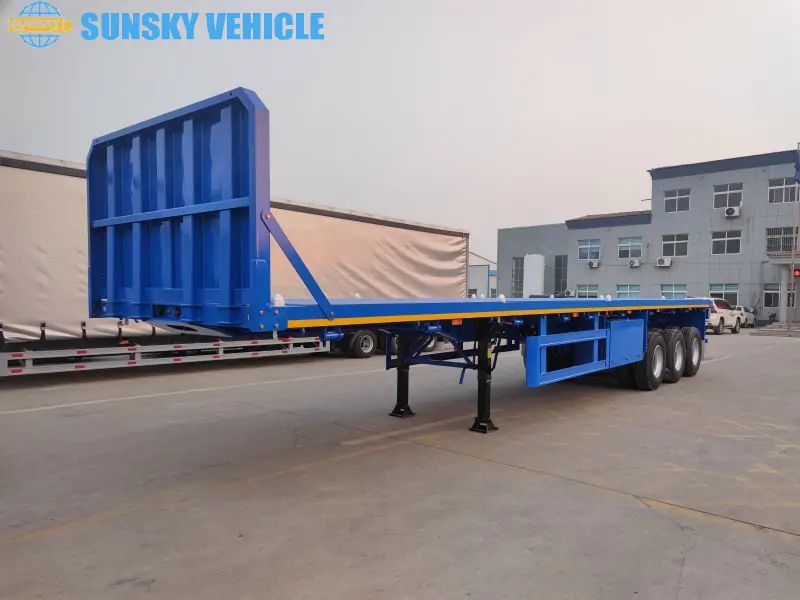
40 Feet Flatbed Trailer complete vehicle
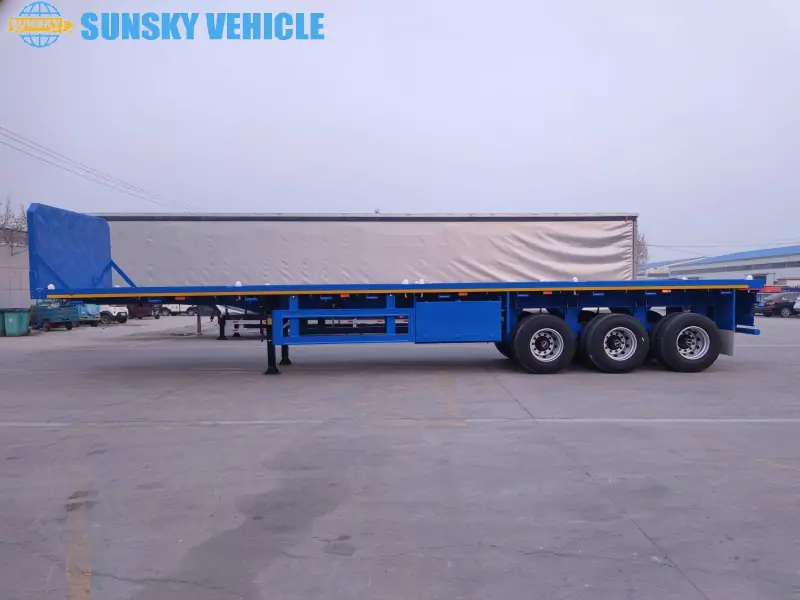
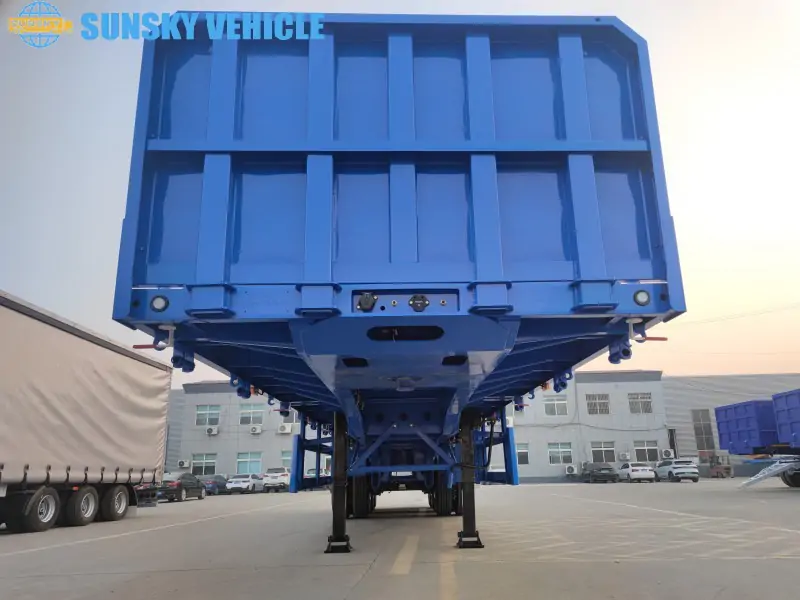
40 Feet Flatbed Trailer chassis
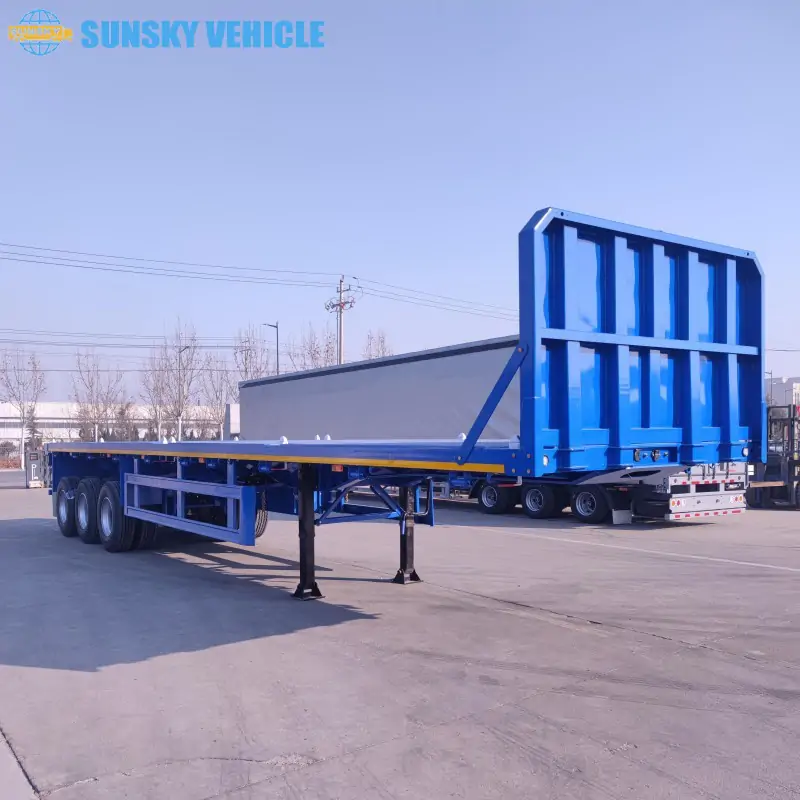
3-axle 40 Feet Flatbed Trailer side view
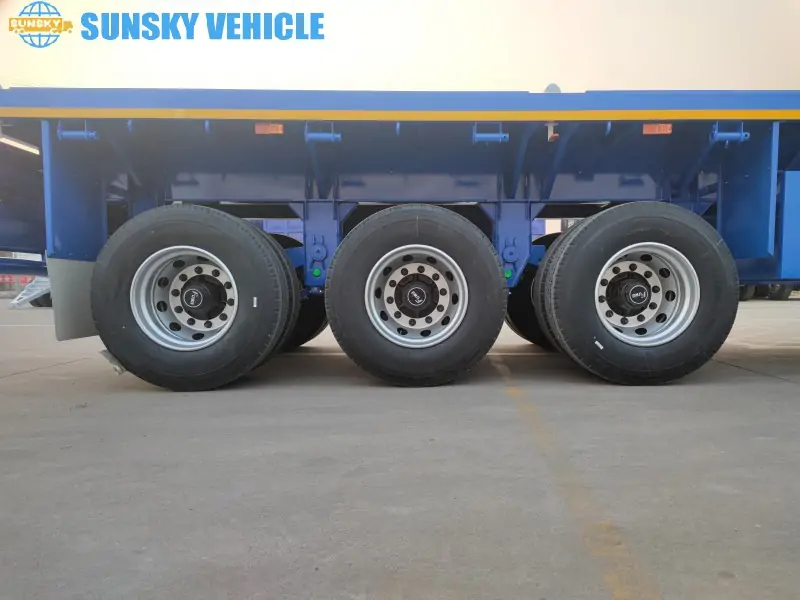
40 Feet Flatbed Trailer tire and suspension
Why Choose Our 40 Feet Flatbed Trailer?
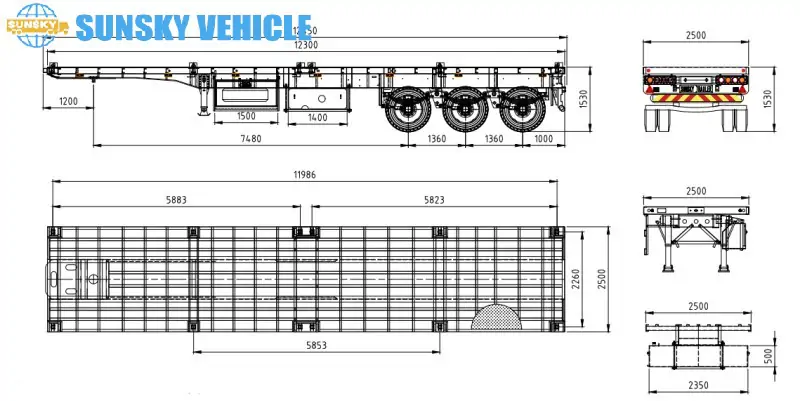
40 Feet Flatbed Trailer draw
Ready to Enhance Your Logistics?
Our 40 feet flatbed trailer is more than just a piece of equipment; it’s a strategic asset for your business. Its combination of a high-strength steel frame, brand-name components like Fuwa axles, and advanced safety features ensures it delivers exceptional value and reliability.
Contact our sales team today for a detailed quote and take the first step towards a more reliable fleet!
Video of 40 Feet Flatbed Trailer
1. What is a flatbed semi-trailer, and how does it differ from other trailer types?
A flatbed semi-trailer is a trailer without fixed side panels or a roof, characterized by its completely flat loading platform. This design provides exceptional flexibility for loading and unloading cargo. Unlike other common trailers, such as box trailers or lowboy trailers, the flatbed’s open structure is its key differentiator. Box trailers offer full enclosure for weather-sensitive goods, while lowboy trailers have a lower center of gravity, primarily for transporting tall or heavy machinery. A flatbed semi-trailer is specifically designed for transporting irregularly shaped, extra-long, or wide cargo, or goods that require loading and unloading from above with a crane.
2. What are the key components of a typical flatbed semi-trailer?
A standard flatbed semi-trailer is composed of several core components:
Main Frame: The structural backbone of the trailer, responsible for supporting the cargo’s weight and transferring pulling force.
Axles: These support the vehicle’s weight, with multiple axles often used to distribute the load.
Suspension System: Connects the axles to the frame, absorbing road vibrations to ensure a smooth ride. Common types include mechanical spring and air suspension.
Brake System: Ensures the vehicle can brake safely, typically a pneumatic brake system.
Tires and Rims: The only point of contact with the ground; their size and number directly affect load capacity.
Kingpin: The crucial component that connects the semi-trailer to the tractor, usually available in two sizes.
Landing Gear: Used to support the trailer and keep it stable when it is detached from the tractor.
3. How should one go about choosing the right flatbed semi-trailer?
Selecting the right flatbed semi-trailer involves a few key considerations:
Cargo Requirements: First, determine the type, size, and weight of the goods you plan to transport. This will dictate the necessary trailer dimensions, load capacity, and number of axles.
Road Conditions: Consider the types of roads you will primarily be traveling on. If you frequently drive on rough or unpaved roads, you might need a more durable suspension system and tires.
Budget and Brand: Establish your budget and choose a reputable brand that offers a solid warranty and after-sales service.
Regulatory Requirements: Be aware of and comply with local traffic laws, including maximum load and dimension limits.
4. What maintenance and upkeep are required for flatbed semi-trailers?
To ensure the long-term safety and efficiency of your trailer, regular maintenance is essential:
Tire Inspection: Regularly check tire pressure, wear, and for any damage, ensuring the pressure is within the specified range.
Brake System: Inspect for air leaks in the brake lines and check the condition of the brake pads and drums.
Suspension and Axles: Regularly lubricate the axles and check for loose or damaged suspension components.
Electrical System: Verify that all lights and wiring are functioning correctly and that connections are secure.
Frame Structure: Periodically inspect the frame for any cracks or deformation, especially around the welds.
5. Why do flatbed semi-trailers have varying numbers of axles, and what is the impact of this?
Flatbed semi-trailers can have anywhere from two to four axles, with three being the most common. The primary purpose of additional axles is to distribute the vehicle’s total load. Increasing the number of axles can:
Boost Load Capacity: More axles mean a higher load capacity, allowing for the transportation of heavier goods.
Distribute Ground Pressure: This helps to reduce damage to roads, which is a regulatory requirement in many regions.
Improve Stability: Multi-axle trailers are generally more stable, especially when navigating turns or uneven terrain.
Therefore, the choice of axle configuration is typically based on the anticipated maximum load and local traffic regulations.