Description
In the world of heavy-duty transportation, a dump trailer needs to be more than just a container; it needs to be a powerhouse of efficiency, durability, and safety. Our 40CBM dump trailer is meticulously engineered to handle your most demanding hauling needs, ensuring your valuable cargo is delivered safely and efficiently.
40CBM Dump Trailer Specifications
| Feature: |
Carry Sand, Stone, Mine, Garbage and so on |
| 40CBM Dump Trailer Dimension: |
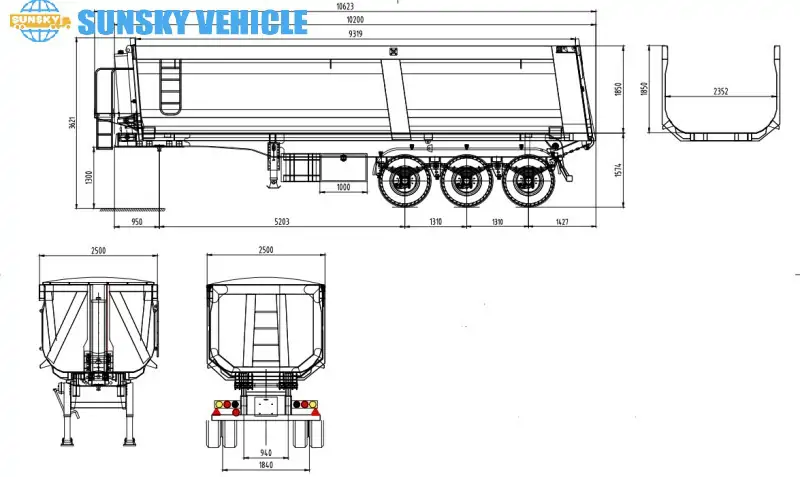
10200*2500*3830 mm (40 CBM) |
| Dump box size |
9335*2300*1850 mm |
| The thickness of body |
Sidewall: 8 mm
Bottom floor: 10mm |
| Capacity (CBM): |
40 CBM |
| Load Capacity |
50,000 kg |
| Tare weight (kgs): |
13,000 kg (40 cbm) |
| Kingpin: |
Bolt-in type JOST 3.5 inch |
| Landing gear: |
Two-speed manual operation JOST 19” |
| Tire size: |
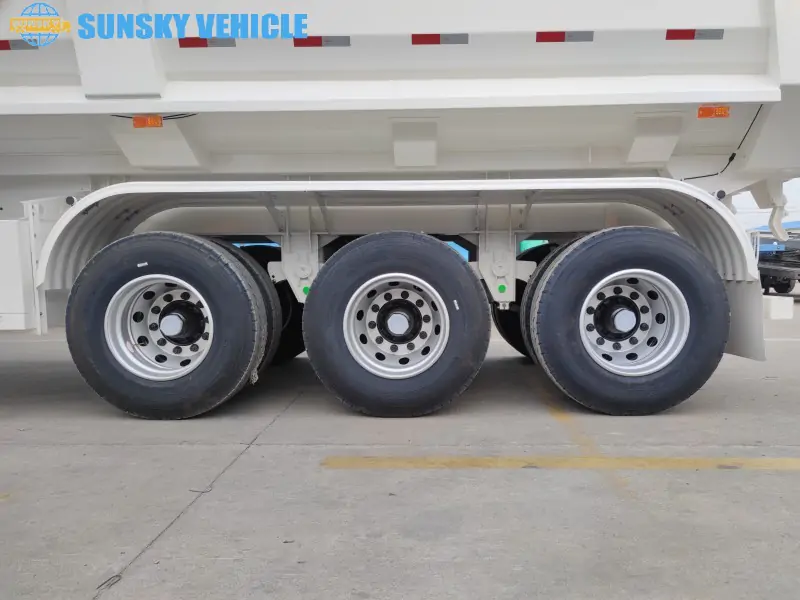
Double coin brand 12R22.5 |
| Rim size: |
9.00*22.5 |
| Axle: |
BPW 14 Tons, 3 Axle |
| Suspension |
Spring suspension with 8 pcs of leaf spring |
| Brake system: |
With ABS, dual line with Re-6 emergency relay valve, T30/30 air chamber, 46L air tank |
| Hydraulic system |
Hyva brand |
| Accessory: |
One toolbox, one set of standard tools, and one manual tarpaulin (including operating platform) |
40CBM Dump Trailer Image
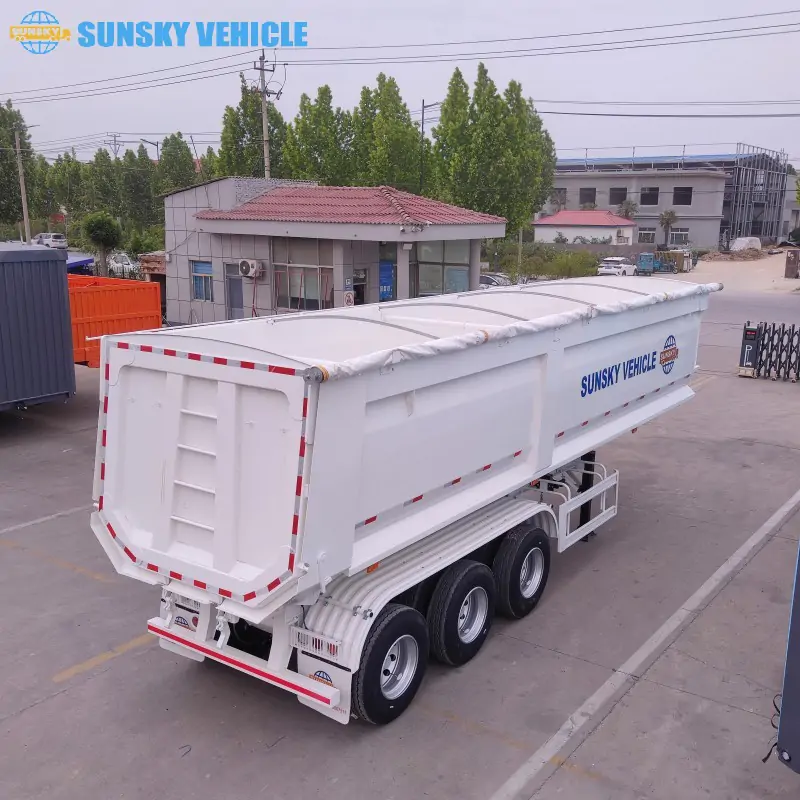
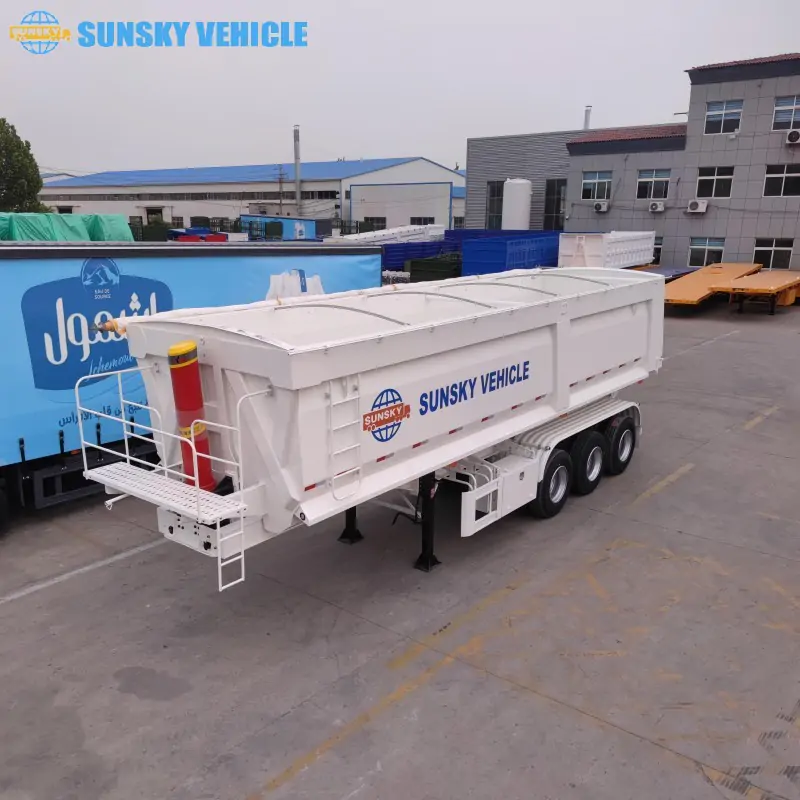
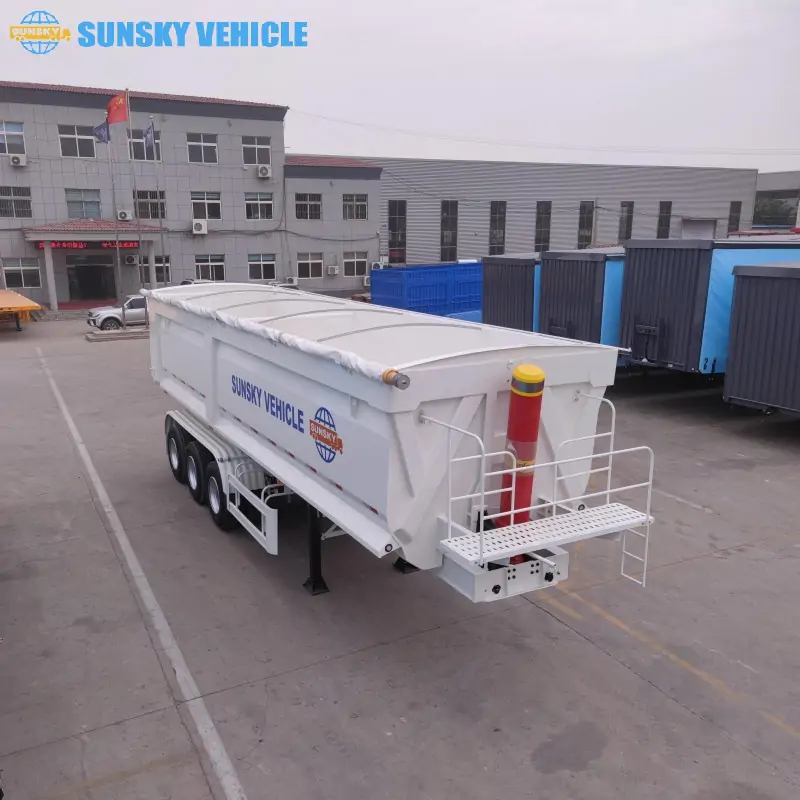
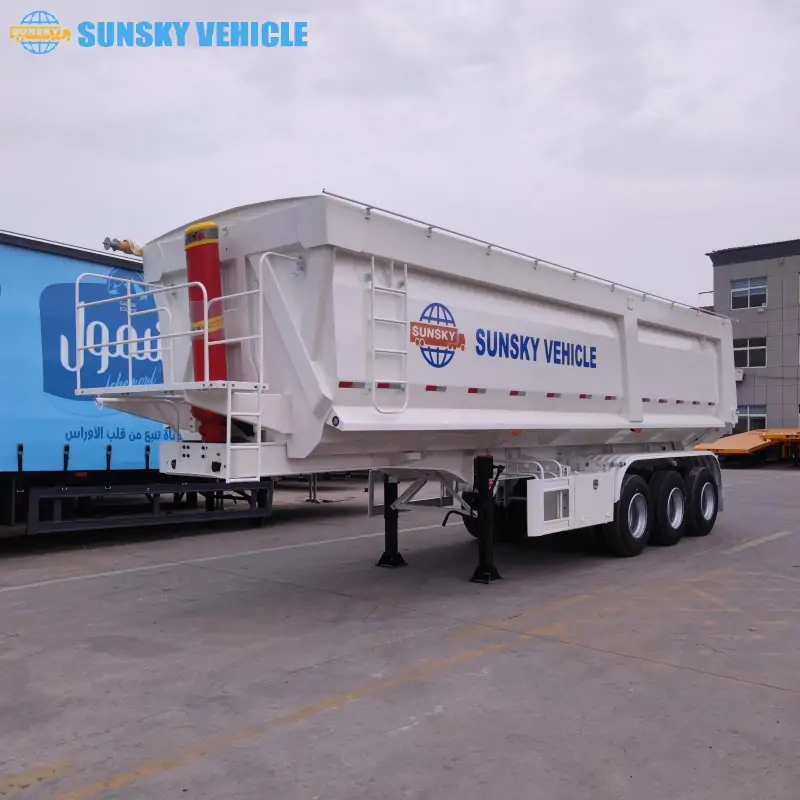
40CBM Dump Trailer complete trailer
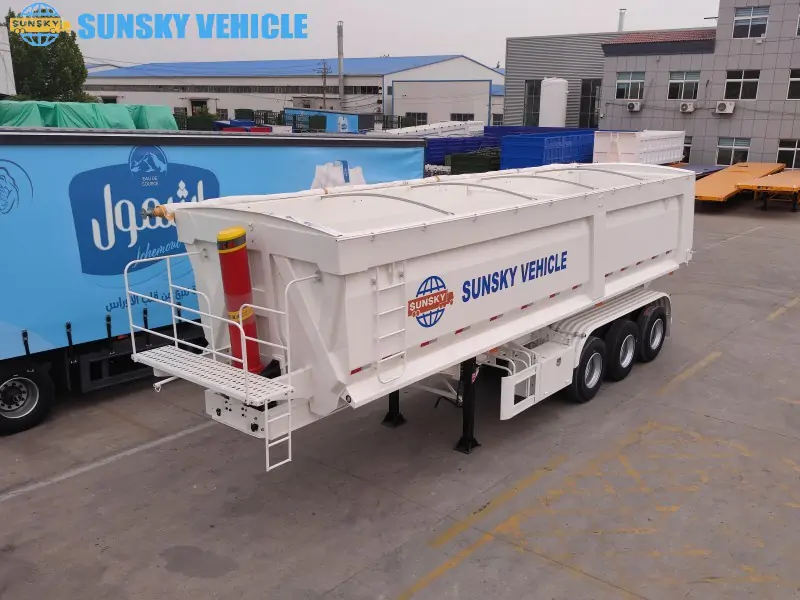
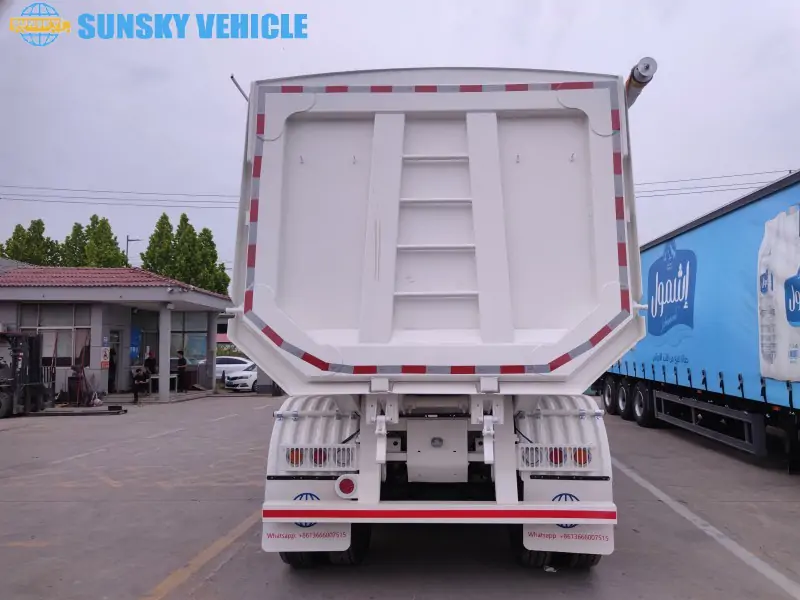
40CBM Dump Trailer tail structure
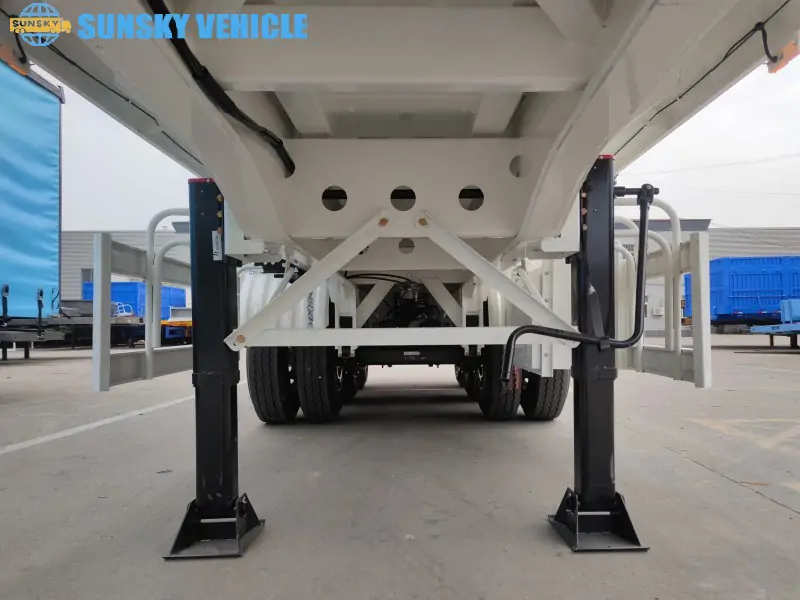
40CBM Dump Trailer chassis
40CBM Dump Trailer tire and suspension
Why Choose Our 40CBM Dump Trailer?
40CBM Dump Trailer draw
Ready to Optimize Your Fleet?
If you’re looking for a dump trailer that offers the perfect blend of strength, efficiency, and safety, our 40CBM model is the ideal choice. Stop dealing with outdated equipment and embrace a solution that elevates your business.
Contact us today to learn more about our dump trailer and get a personalized quote!
1. What is a dump trailer?
A dump trailer is a trailer with a hydraulic lift system. This system allows you to easily tilt the trailer bed to unload bulk materials such as sand, gravel, soil, and waste without manual handling.
2. What are the main types of dump trailers?
There are two main types:
Rear dump trailer: The most common type, with the bed tilted rearward for unloading. Suitable for unloading a variety of bulk materials.
Side dump trailer: The bed tilts left or right for unloading. This type of trailer is useful in certain situations, such as when space is limited or precise unloading is required.
3. How to choose the right dump trailer?
You need to consider the following key factors:
Load capacity: Choose based on the weight of the material you plan to transport. The trailer’s gross vehicle weight rating (GVWR) and payload are important indicators.
Bed dimensions: Ensure the bed’s length, width, and depth are sufficient to accommodate your material. Hydraulic System: The quality and power of the hydraulic system determine the efficiency and stability of dumping.
Trailer Connection Type: Confirm that the connection type of the trailer head (your truck) (e.g., gooseneck or conventional traction) matches the trailer.
4. What maintenance precautions are required for a dump trailer?
To ensure safe and efficient operation of the trailer, regular maintenance is crucial:
Inspecting the Hydraulic System: Regularly check the hydraulic oil level and quality to ensure there are no leaks.
Lubrication: Regularly lubricate all moving parts and hinges.
Inspecting Tires: Maintain tire pressure within the normal range and inspect tires for wear or damage.
Braking System: Ensure that the brakes are functioning properly.
Cleaning: Clean the trailer bed promptly after use to prevent material residue from affecting the next use or corroding the bed.
5. What safety precautions should be taken when using a dump trailer?
Overloading: Never exceed the trailer’s maximum load capacity. Overloading can lead to serious safety issues.
Unloading Environment: Unload on a flat, solid surface. Avoid tilting the vehicle on slopes or uneven surfaces.
Personnel: Ensure the area around the vehicle is clear of people and obstacles when unloading.
Inspection: Before each use, inspect all connection points, safety pins, and hydraulic systems for proper operation.