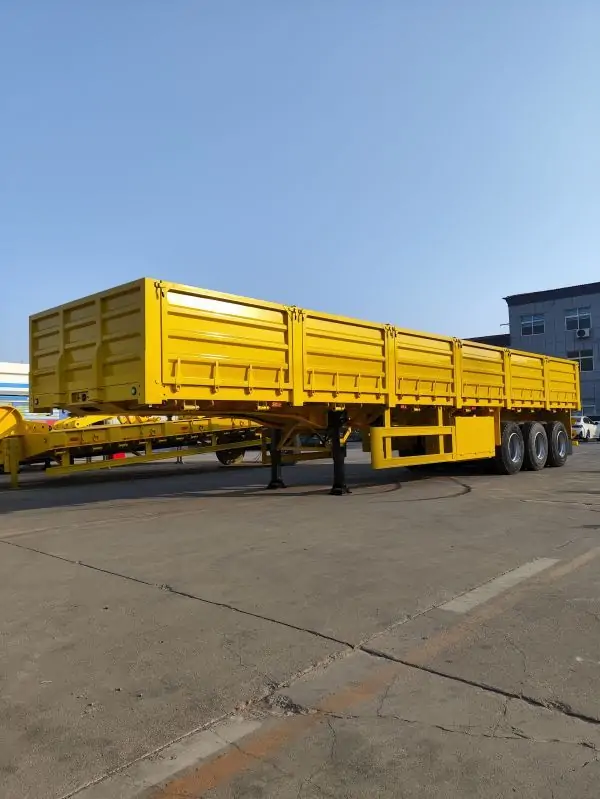
Description
Transporting dry bulk powder materials requires a trailer that is not only robust but also highly efficient and reliable. Our 45CBM Bulk Cement Semi-trailer is meticulously engineered to meet the demanding needs of the construction and logistics industries. This vehicle is your partner for seamless and professional material delivery.
Bulk Cement Semi-trailer Specifications
| Feature: |
Carry bulk cement, ash, and powder. |
| Bulk Cement Semi-trailer Dimension: |
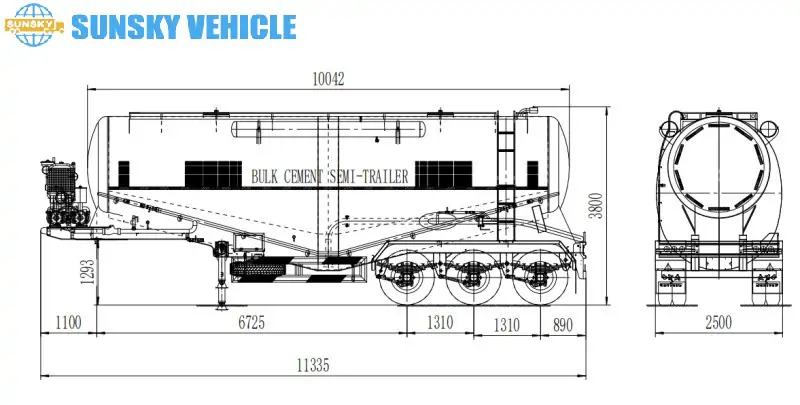
11200*2500*3850 mm (45 cbm) |
| Material |
Carbon Steel |
| No. of axles: |
3 |
| Capacity (CBM): |
45 CBM |
| Tare weight (kgs): |
10500 kg |
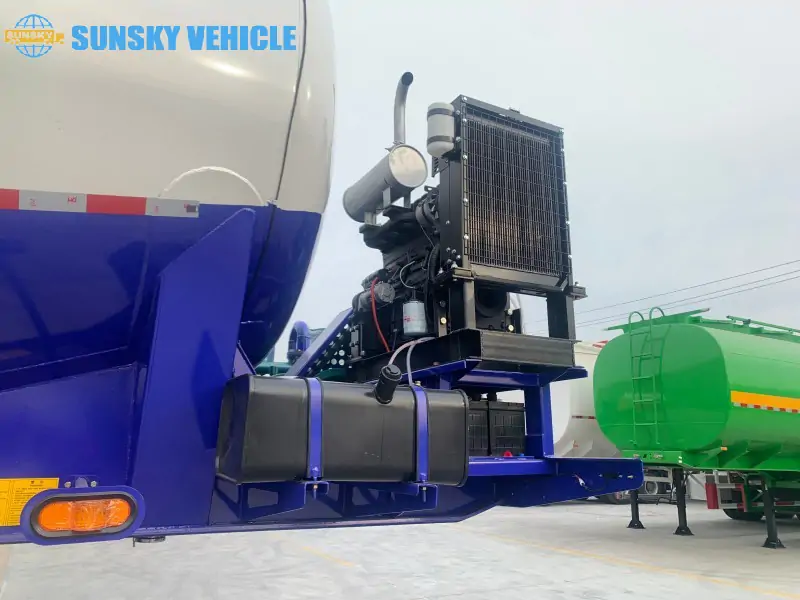
| Diesel Engine |
50 kW |
| Air compressor |
12/2 double cylinder |
| Kingpin: |
Bolt-in type 3.5” |
| Landing gear: |
Two-speed manual operation 19” |
| Tire size: |
Triangle Brand 12R22.5 |
| Rim size: |
9.00*22.5 |
| Axle: |
3 Axles, Sunsky brand, 13 tons |
| Suspension |
Spring suspension |
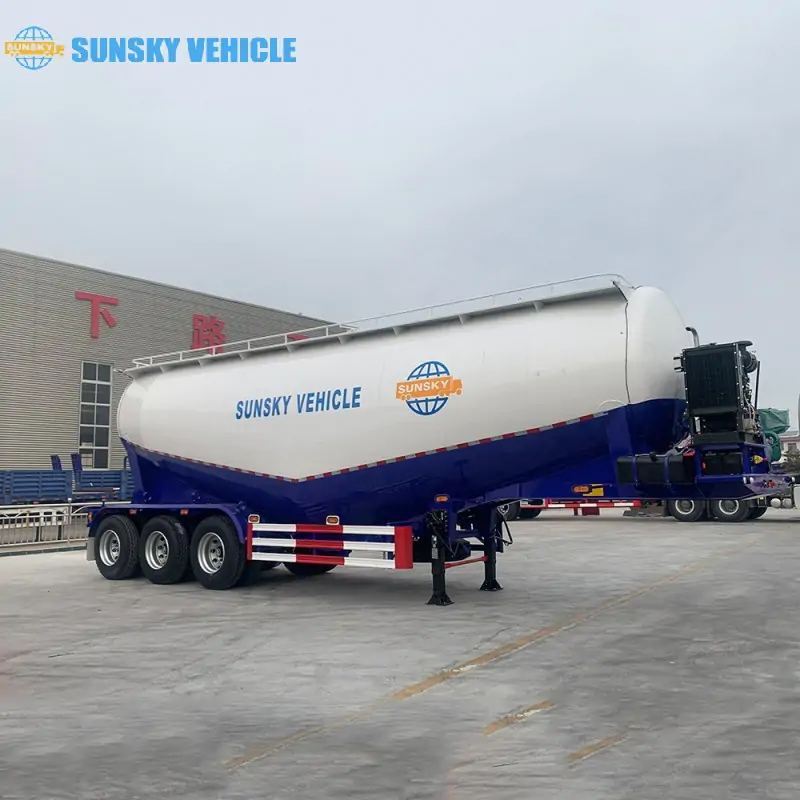
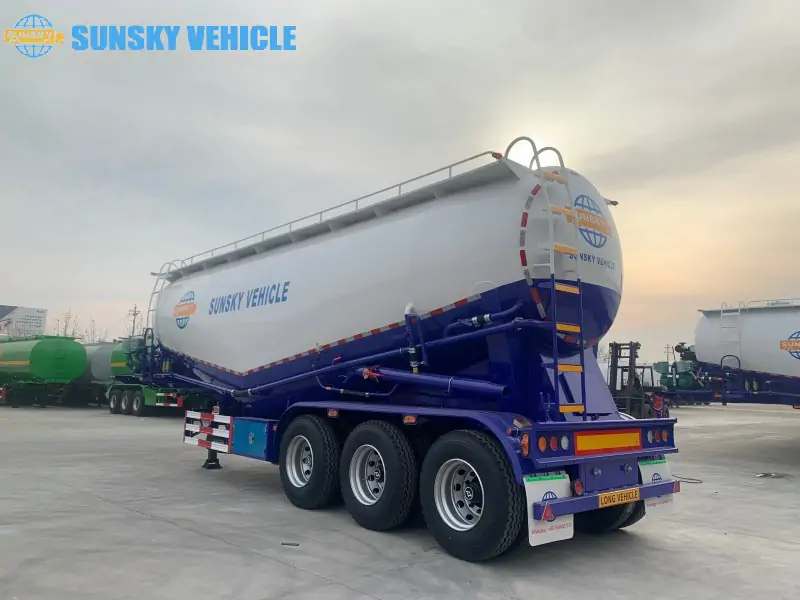
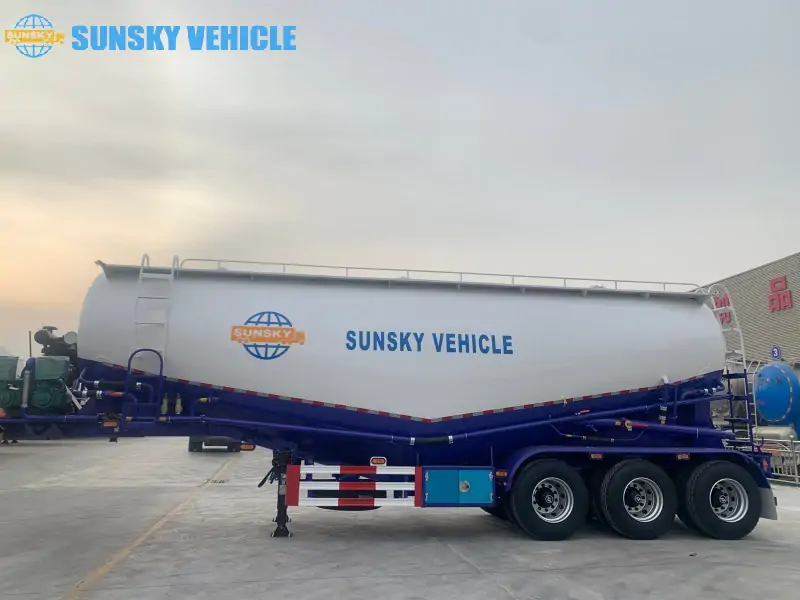
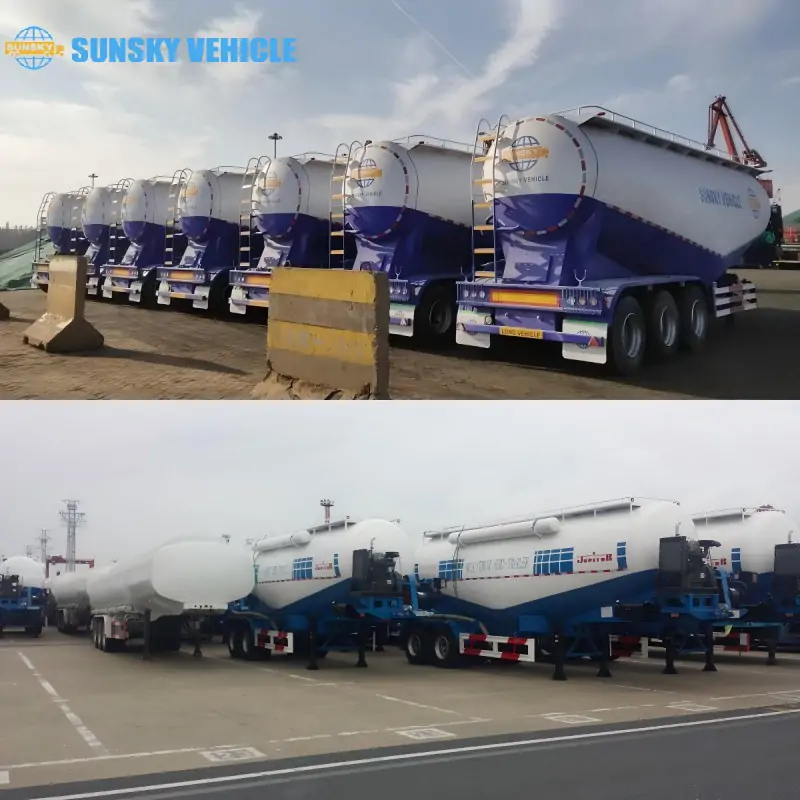
Bulk Cement Semi-trailer Image
Bulk Cement Semi-trailer Diesel engine
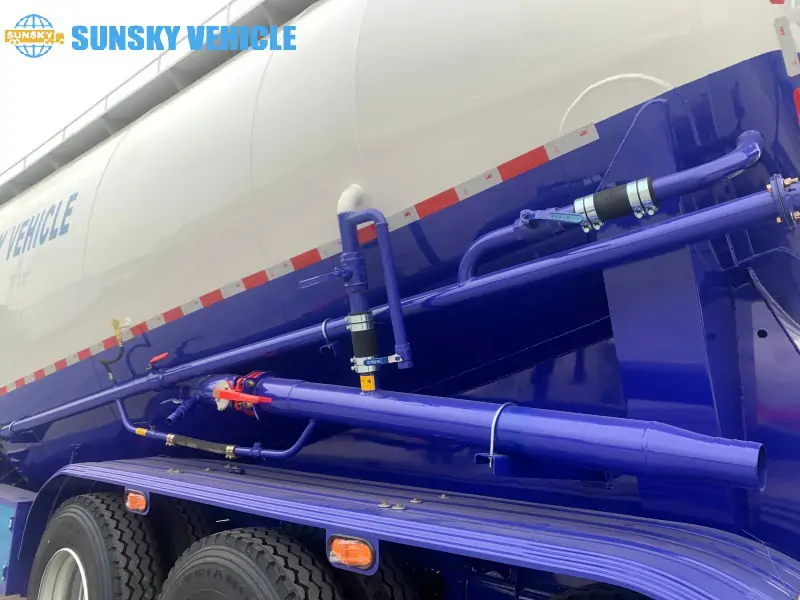
Bulk Cement Semi-trailer Discharge pipe
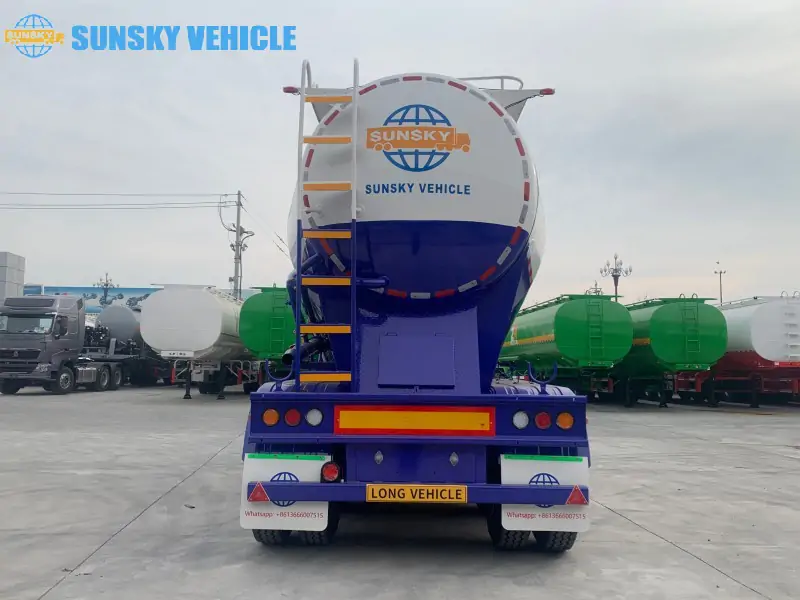
Bulk Cement Semi-trailer tail structure
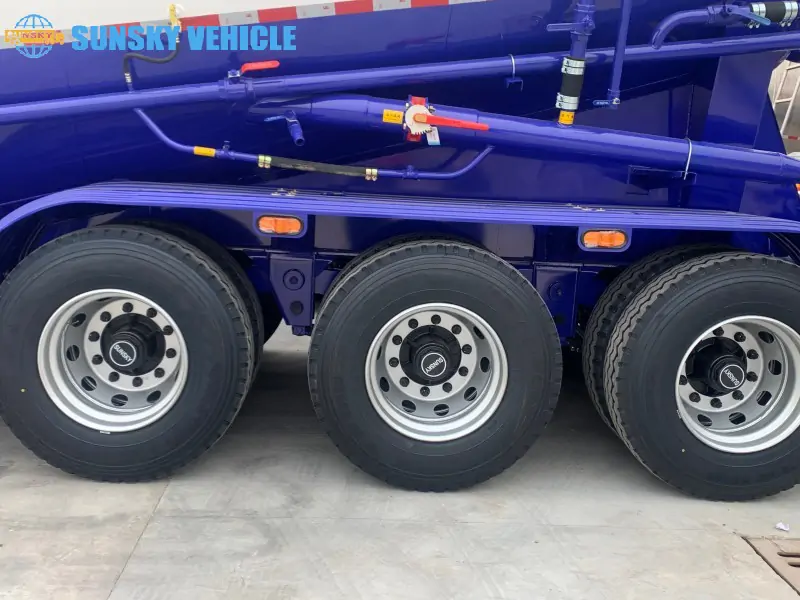
Bulk Cement Semi-trailer tire and suspension
Why Choose Our Bulk Cement Semi-trailer?
Bulk Cement Semi-trailer draw
Ready to Optimize Your Logistics?
Whether you’re transporting cement for a large-scale construction project or delivering fly ash to a production plant, our 45CBM Bulk Cement Semi-trailer offers the ideal blend of power, durability, and efficiency. Stop dealing with outdated equipment and embrace a solution that elevates your business.
Contact us today to learn more about our bulk cement semi-trailer and get a personalized quote!
Video of bulk cement trailer
1. What is a bulk cement tanker, and what is it primarily used to transport?
A bulk cement tanker, also commonly known as a powder and granular material transporter or cement tanker, is a specialized semi-trailer used to transport bulk powdered materials. It features a sealed tank design and utilizes air pressure for loading and unloading, enabling efficient and environmentally friendly transportation of various dry powdered materials such as cement, fly ash, lime powder, and slag powder.
2. How does a bulk cement tanker load and unload?
During loading, gravity loading is typically performed through the feed port at the top of the tank. During unloading, compressed air is injected into the tank via an onboard air compressor to fluidize the powdered material. When the tank pressure reaches a certain level, the discharge valve opens, and the material is discharged through the discharge pipe under air pressure. The entire process is highly automated, preventing material leaks and environmental pollution.
3. What are the main components of a bulk cement tanker?
A bulk cement tanker truck primarily consists of the following components:
Tanker: The main body that carries the material, typically made of high-strength steel or aluminum alloy, and can be cylindrical or V-shaped.
Air compressor: Responsible for providing compressed air to the tank and is a key component in the unloading process.
Axle and suspension system: Ensures the vehicle’s load-bearing capacity and driving stability.
Unloading pipe: Connects the tank’s discharge port to an external unloading point.
Intake and exhaust system: Includes the feed port, breather valve, and safety valve, used to control the tank’s internal pressure.
4. What parameters should I consider when selecting a bulk cement tanker truck?
When selecting a bulk cement tanker truck, you should focus on the following parameters:
Capacity: Select the appropriate cubic meter capacity based on your transportation needs. Common options include 35 cubic meters, 40 cubic meters, and 45 cubic meters.
Tanker material: Determines the vehicle’s weight and durability. High-strength steel is economical, while aluminum alloy is lighter.
Number of Axles and Load Capacity: The more axles, the greater the load capacity. Choose the appropriate configuration based on regulations and transport weights.
Air Compressor Brand and Performance: The air compressor is key to unloading efficiency, so choose a reliable brand and model.
Unloading Speed: An efficient unloading speed saves time and improves transportation efficiency.
5. Are there any special maintenance requirements for bulk cement tankers?
Due to their unique operating environment, maintenance of bulk cement tankers is particularly important. This includes:
Regular air compressor inspections: Ensure proper operation and regularly replace filters and lubricants.
Tank Airtightness Inspection: Regularly test the tank for leaks to prevent air leaks that could affect unloading.
Unloading System Inspection: Clean the unloading pipes to ensure they are free of blockages and check valves for proper function.
Routine chassis maintenance: Maintenance of tires, brakes, and suspension systems is similar to that of standard semi-trailers.