Description
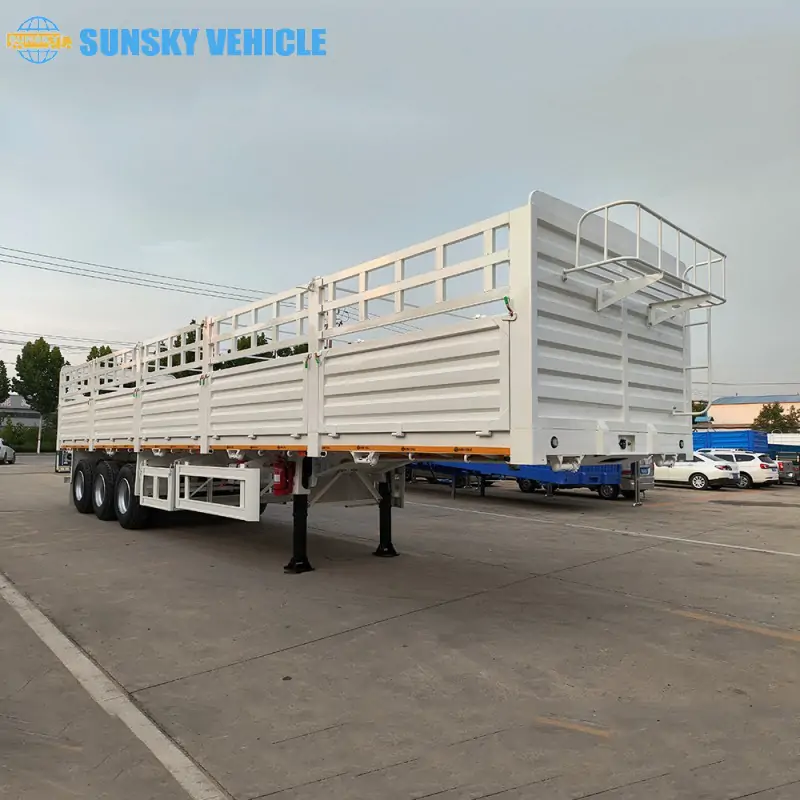
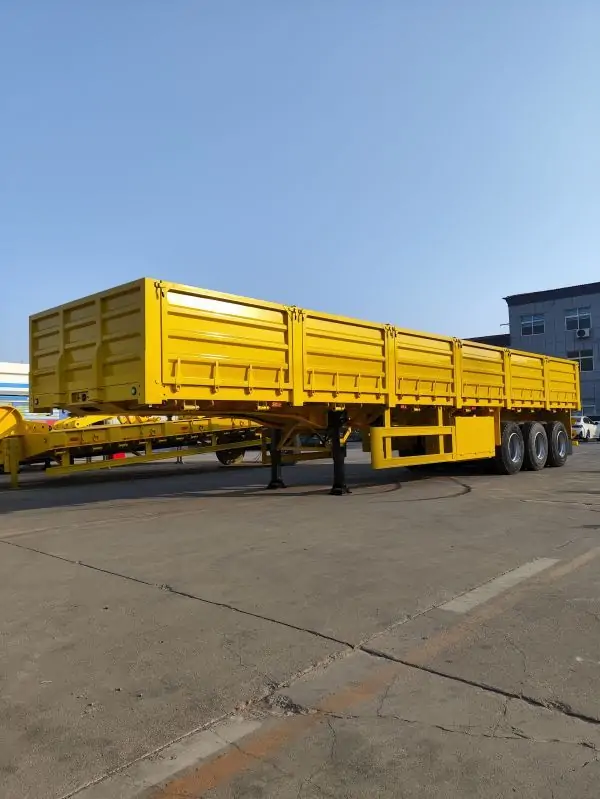
In the world of logistics, a single-purpose trailer can limit your business. That’s why we designed our fence trailer to be the most versatile tool in your fleet. This trailer is not just a carrier; it’s a strategic asset that adapts to your diverse cargo needs, from loose goods to standard containers, all in one robust package.
Fence Trailer Specifications
| Feature: |
Carry 1X40FT, 1X20FT, or 2X20FT containers |
| Fence Trailer Dimension (L*W*H): |
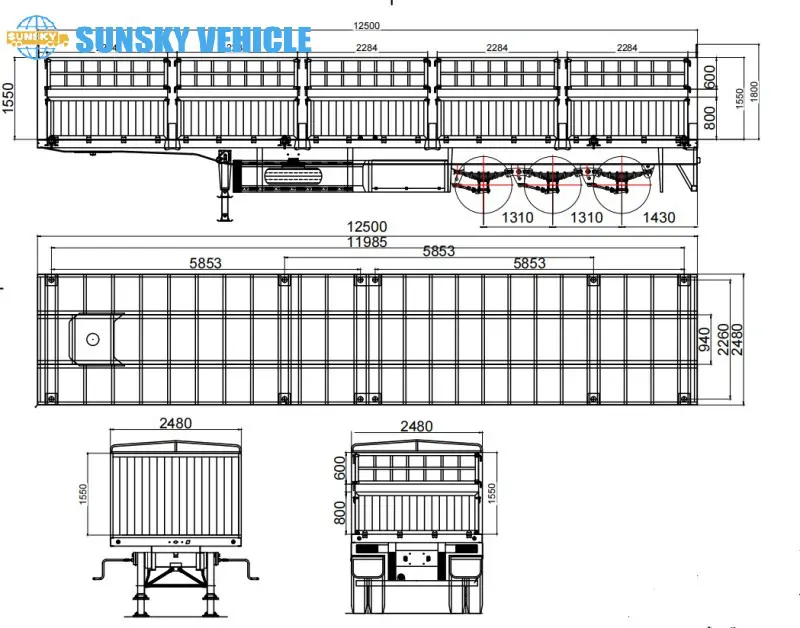
12420*2480*1570mm |
| Sidewall: |
800mm drop wall + 600mm fence wall |
| No. of axles: |
3 |
| Payload (kgs): |
60000 |
| Tare weight (kgs): |
9000 |
| Kingpin: |
Bolt-in type 3.5” |
| Landing gear: |
Two-speed manual operation 19” |
| Tire size: |
12R20 |
| Rim size: |
8.5*22.5 |
| Axle: |
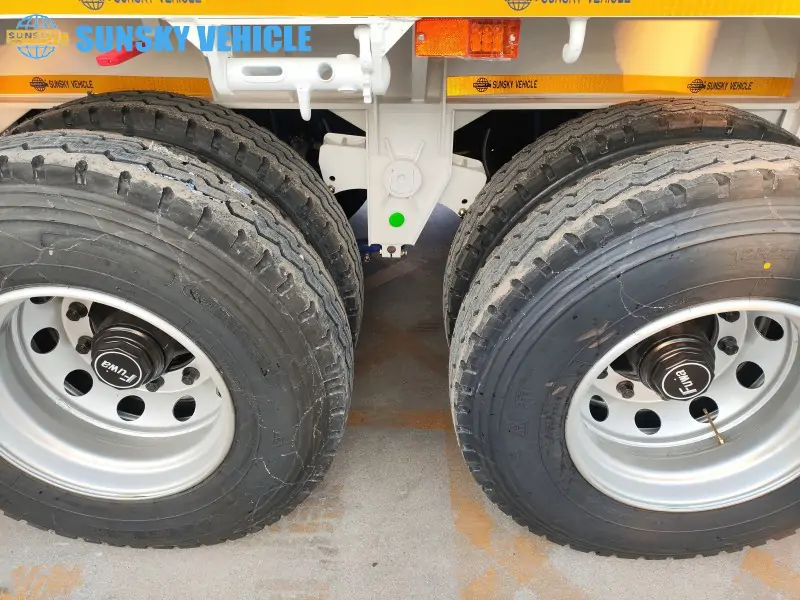
3 Axle, 13 Tons Fuwa brand |
| Suspension |
Spring suspension |
| Container locks |
12 (for 1X20GP, 2X20GP, 1X40HQ) |
| Painting: |
Two coats of anti-corrosion primer and one coat of finish painting |
| Accessory: |
One toolbox; One standard tool |
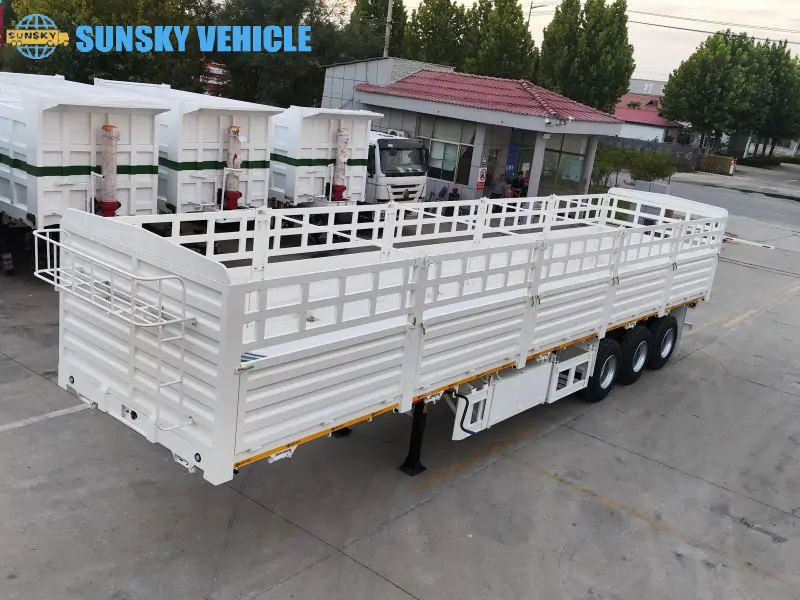
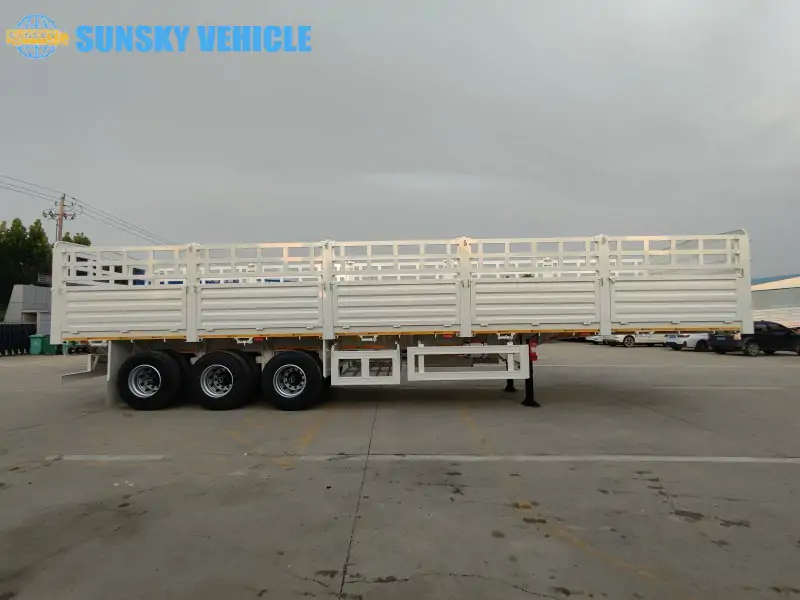
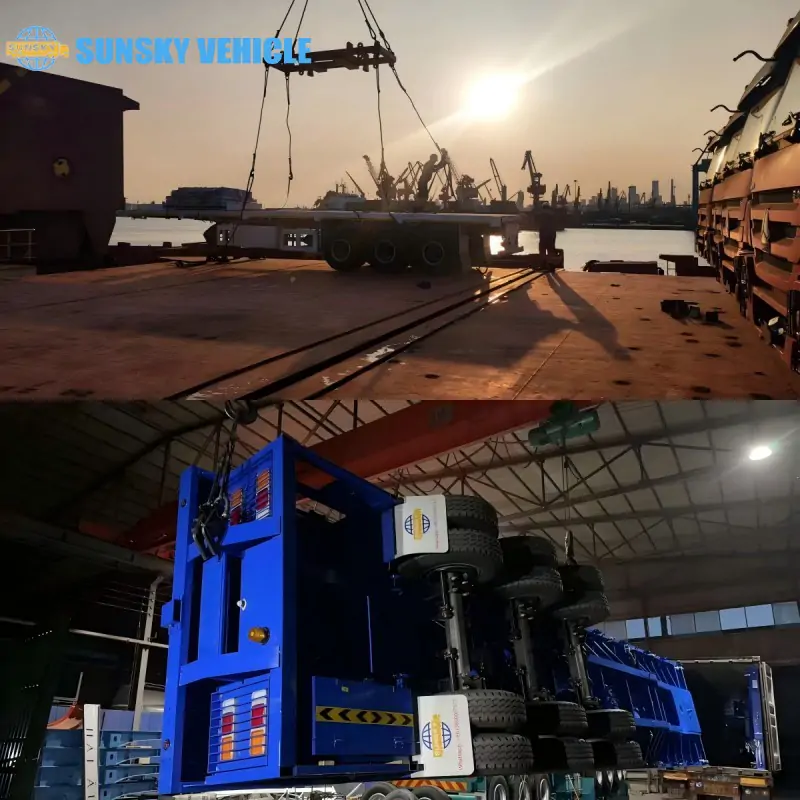
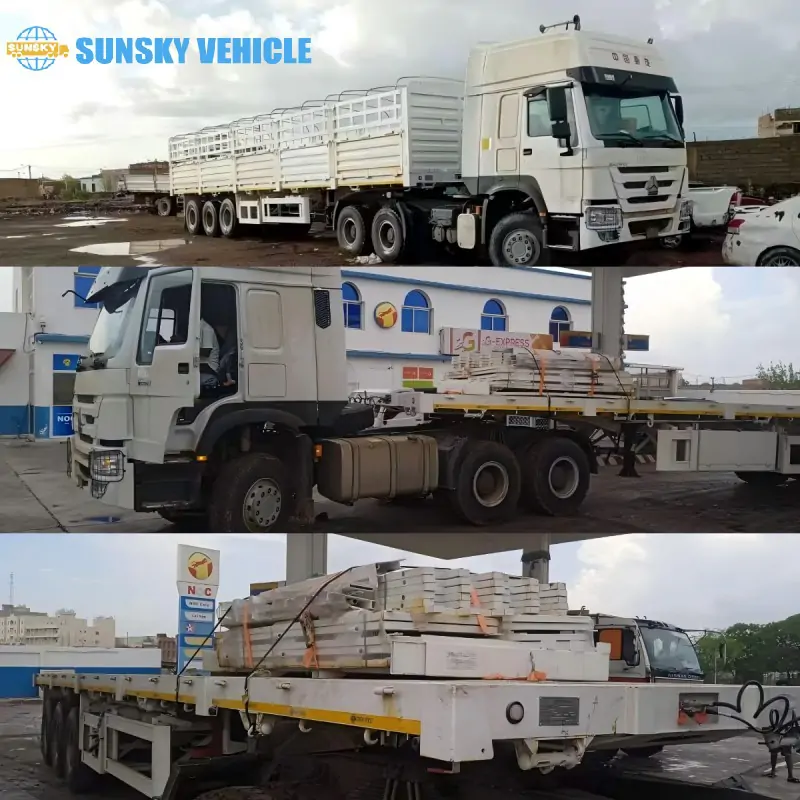
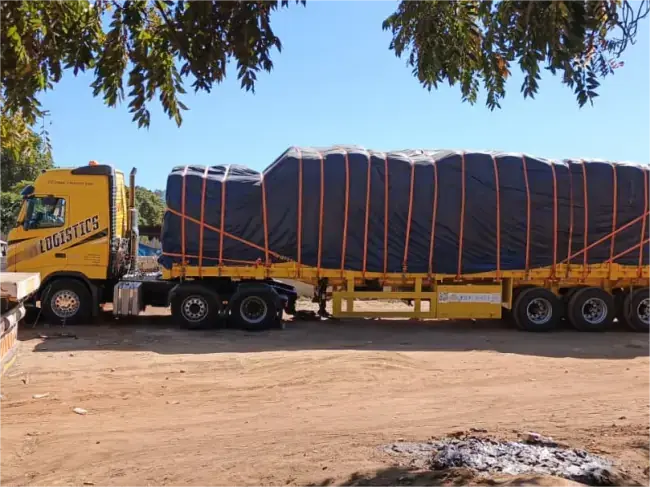
Fence Trailer Image
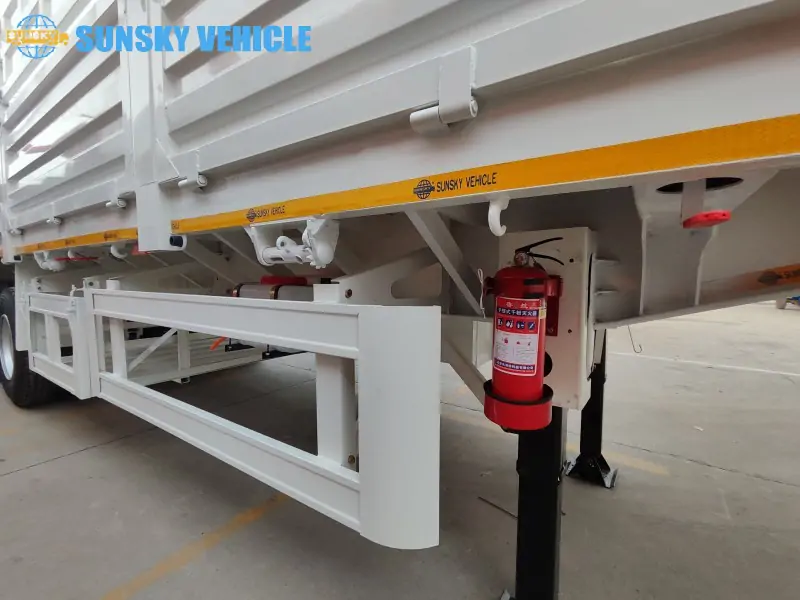
Fence Trailer chassis
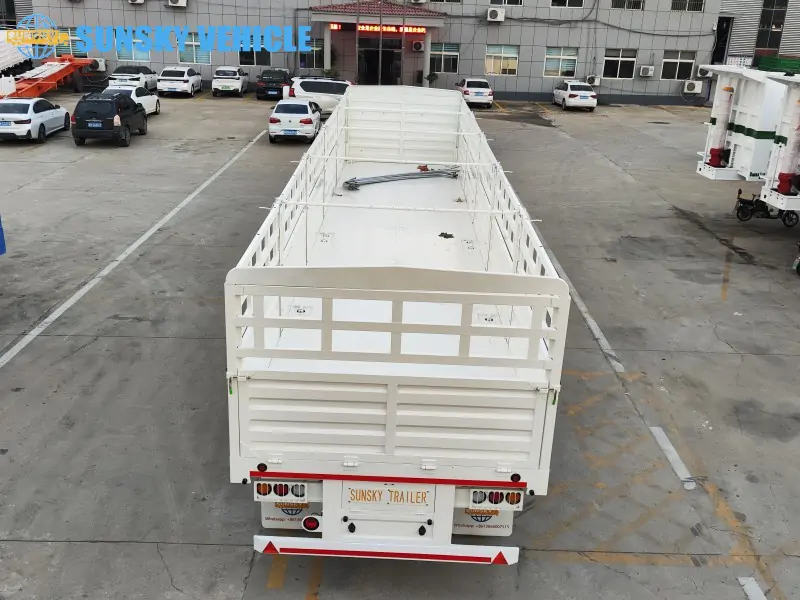
Fence Trailer tail structure
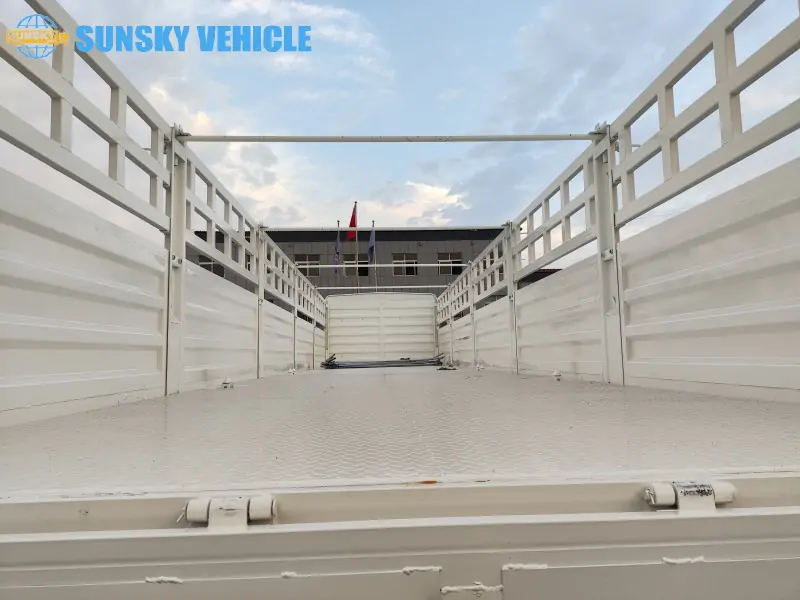
Fence Trailer cargo box
Fence Trailer tire and suspension
Why Choose Our Fence Trailer?
Fence Trailer draw
Ready to Maximize Your Fleet’s Efficiency?
If you’re looking for a single trailer that can handle bulk cargo, palletized goods, and containers, the fence trailer is your answer. Its unique design and robust construction offer a level of versatility and reliability that is unmatched. Stop using multiple trailers for different jobs and streamline your operations with our multi-purpose solution.
Contact us today to learn more and get a custom quote!
1. What is a fenced semi-trailer, and what cargo is it primarily used to transport?
A fenced semi-trailer, also often called a side panel semi-trailer, is a flatbed semi-trailer with a removable or fixed fence. It combines the features of a flatbed and a fenced vehicle and is primarily used to transport bulk cargo, bagged cargo, loose materials, or light equipment that requires lateral protection. Common cargo includes agricultural products, construction materials, livestock, and various other loose goods.
2. What are the advantages of a fenced semi-trailer over a regular flatbed semi-trailer?
The greatest advantage of a fenced semi-trailer lies in its versatility. It can function as a flatbed to transport large equipment and containers, and its fence design allows for the safe transport of bulk or loose cargo, preventing it from sliding during transport. This design significantly improves vehicle utilization and transportation flexibility.
3. What are the key components of a fenced semi-trailer?
A fenced semi-trailer primarily consists of a main beam, side beams, a floor, a suspension system, axles, and fences. The main beam and side beams form the vehicle frame, providing load-bearing capacity; the floor serves as the load-bearing surface; the suspension and axle system ensures driving stability and safety; and the side rails secure the cargo. Some models are also equipped with container locks to accommodate container transport.
4. What are the advantages of using a side wall trailer for loading and unloading cargo?
The side panels of a side rail semi-trailer are typically removable or removable, making loading and unloading more convenient. Whether loading from the side with a forklift or manually loading and unloading bulk cargo, the open side design greatly improves work efficiency.
5. How to Choose the Right Fence Trailer for You?
When choosing a side rail semi-trailer, you need to consider your primary transportation needs. Key factors include:
Load Requirements: Determine the maximum weight of the cargo you typically transport and select a semi-trailer with an appropriate load capacity.
Side Rail Height: Choose the appropriate side rail height based on the cargo type to ensure safety.
Number of Axles: Choose the number of axles based on load capacity and regulatory requirements. Typically, two, three, or more axles are available. Additional functions: Whether special functions such as container locks, detachable fences, etc. are required.